What I Saw at ARPA-E Summit 2026, and the Thesis It Sharpened
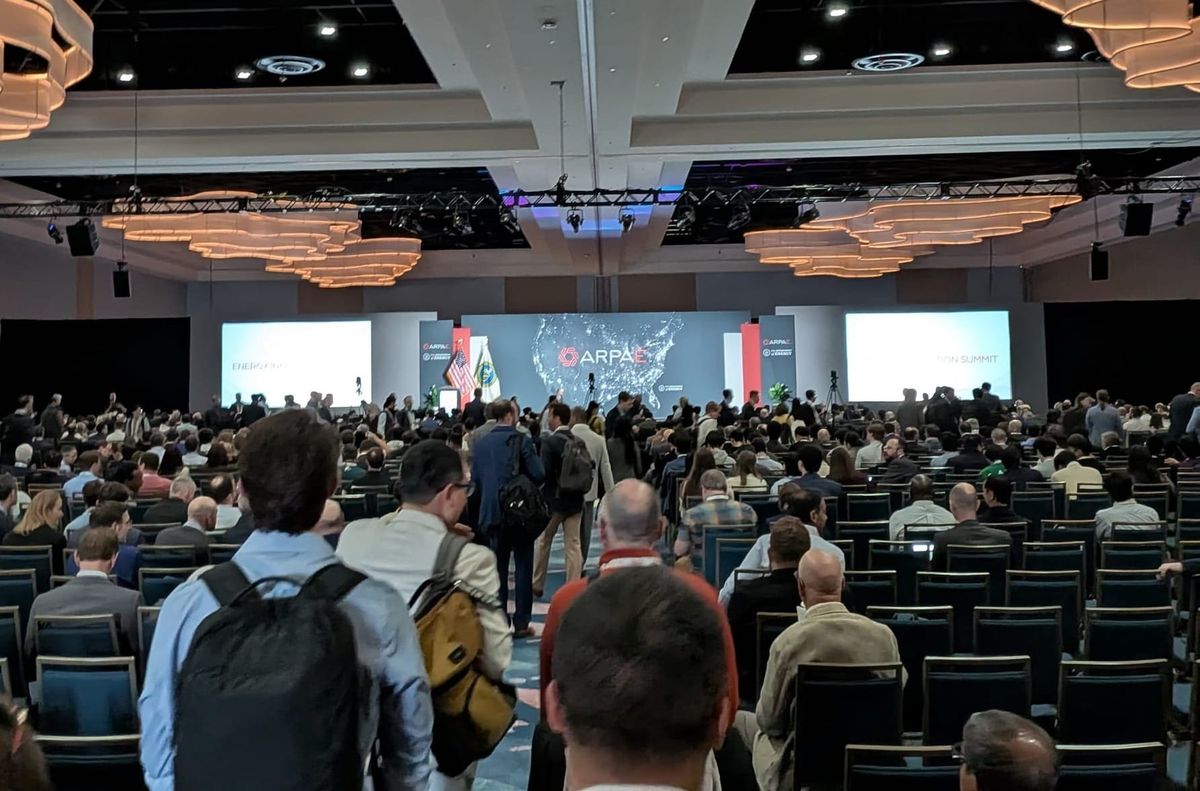
I've spent the past two months at fusion and defense conferences: FusionX:Global, the FIA Annual Policy Conference, the U.S. IFE Conference, TechNatSec, and more. Each one operates with a different DNA. FIA and TechNatSec are policy-driven, shaped by legislative momentum and procurement cycles. U.S. IFE is academic, built around peer-reviewed physics and laboratory milestones. All valuable, all bounded by their own logic.
ARPA-E is none of these.
This is scientist-led, but it is not academic. It is government-funded, but it is not policy-driven. It is an agency that hands scientists real money and asks them to break something fundamental. The imagination bandwidth is on a completely different level.
I walked into the ARPA-E Summit expecting a government energy conference. What I found was a science fiction exhibition, run by the scientists actually building what's inside.
The imagination bandwidth problem
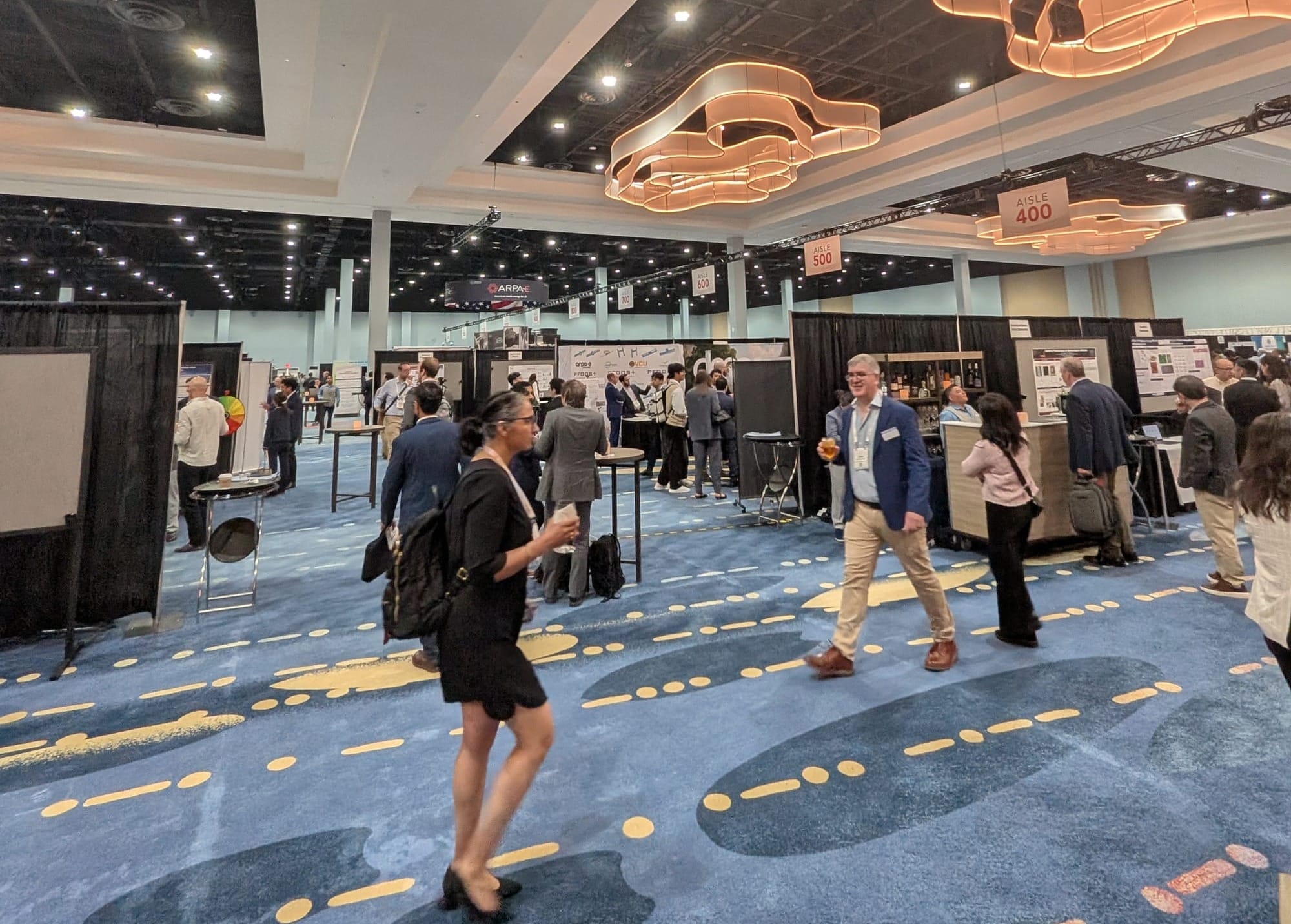
Over 100 booths at the Technology Showcase. Most conferences have booths. ARPA-E had demonstrations of things I had never considered as engineering problems worth solving.
Limelight Steel is using semiconductor laser diode arrays to heat iron ore above 1,600°C, splitting molten iron from impurities without coal or hydrogen. Oxygen out instead of CO₂. Their process works on 100% of commercial iron ore grades, not just the 3% that hydrogen-based steelmaking requires. Two UC San Diego PhDs, an Activate fellowship, $4.6M in ARPA-E funding, and Khosla Ventures backing.
Virtus Solis Technologies is assembling hexagonal photovoltaic modules in orbit via robotic arms on Starship, then beaming 10 GHz microwaves to ground-based rectennas from Molniya orbit. Their ARPA-E project targets 70% end-to-end DC-to-DC wireless power transfer efficiency. If achieved, that would be a world record. The founder is a former SpaceX rocket engineer with three decades of manufacturing experience.
Metalplant PBC is genetically engineering hyperaccumulator plants that extract nickel from soil. The U.S.'s last primary nickel mine is scheduled to close this year, and over 90% of American nickel is imported. ARPA-E's PHYTOMINES program has funded seven teams with $9.9M to develop phytomining at scale. Metalplant's approach produces carbon-negative nickel: 200 kg of CO₂ removed per kilogram of nickel produced.
These are not incremental improvements to existing systems. These are new categories of technology. Laser metallurgy. Orbital power transmission. Botanical mining. Each one funded by an agency that exists specifically to back ideas the private market cannot yet price.
The $135M signal
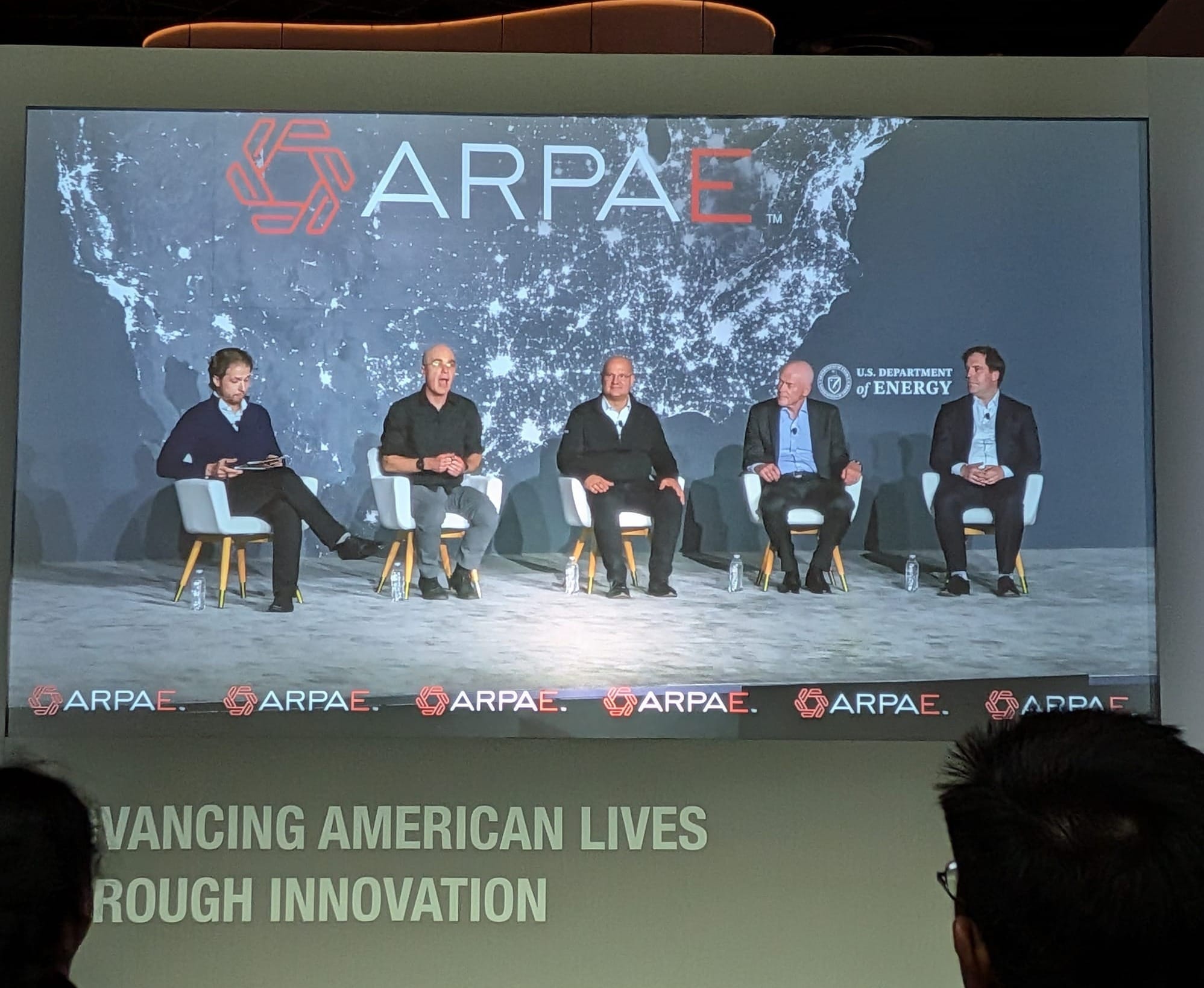
On Day 2, ARPA-E Director Conner Prochaska announced $135 million in new fusion funding, the largest concentrated fusion investment in the agency's history. This effectively doubles ARPA-E's entire fusion portfolio since 2014. The funds will be deployed over 18 months across four focus areas: advanced plasma heating and driver systems, next-generation fuel cycles, advanced power conversion, and innovative plant architectures.
The timing is significant. Four days before the Summit, the FY2027 budget proposal requested a 43% cut to ARPA-E's overall budget and a $50 million cut to Office of Science fusion programs. One part of DOE is accelerating while another is pulling back. Andrew Holland of the Fusion Industry Association captured the tension precisely: having one bureau increase funding while another cuts is not how you win the race to commercial fusion.
But the $135M commitment is not just a funding number. It is a signal about where ARPA-E sees structural gaps. The Fast Pitch sessions made this visible. Program Directors laid out their visions for what the energy system still lacks. Alina LaPotin, an ARPA-E Fellow who demonstrated a then-record 40% thermophotovoltaic efficiency (published in Nature), is now pushing solid-state TPV power conversion for nuclear microreactors, replacing turbines entirely with semiconductor cells that have no moving parts. Emily Kinser, a Program Director with 71 IBM patents, is simultaneously shaping programs across fusion, critical minerals, and silicon photonics.
The First-of-a-Kind Pitch gave me a front-row view of how an ARPA-E deeptech company scales. HTSI (High Temperature Superconductors, Inc.) received $5M, the largest single award from ARPA-E's superconductor exploratory fund, to scale REBCO HTS wire production via pulsed laser deposition. If fusion magnets need superconducting wire at volume, someone has to build the factory. HTSI is building the factory.
The navigation map
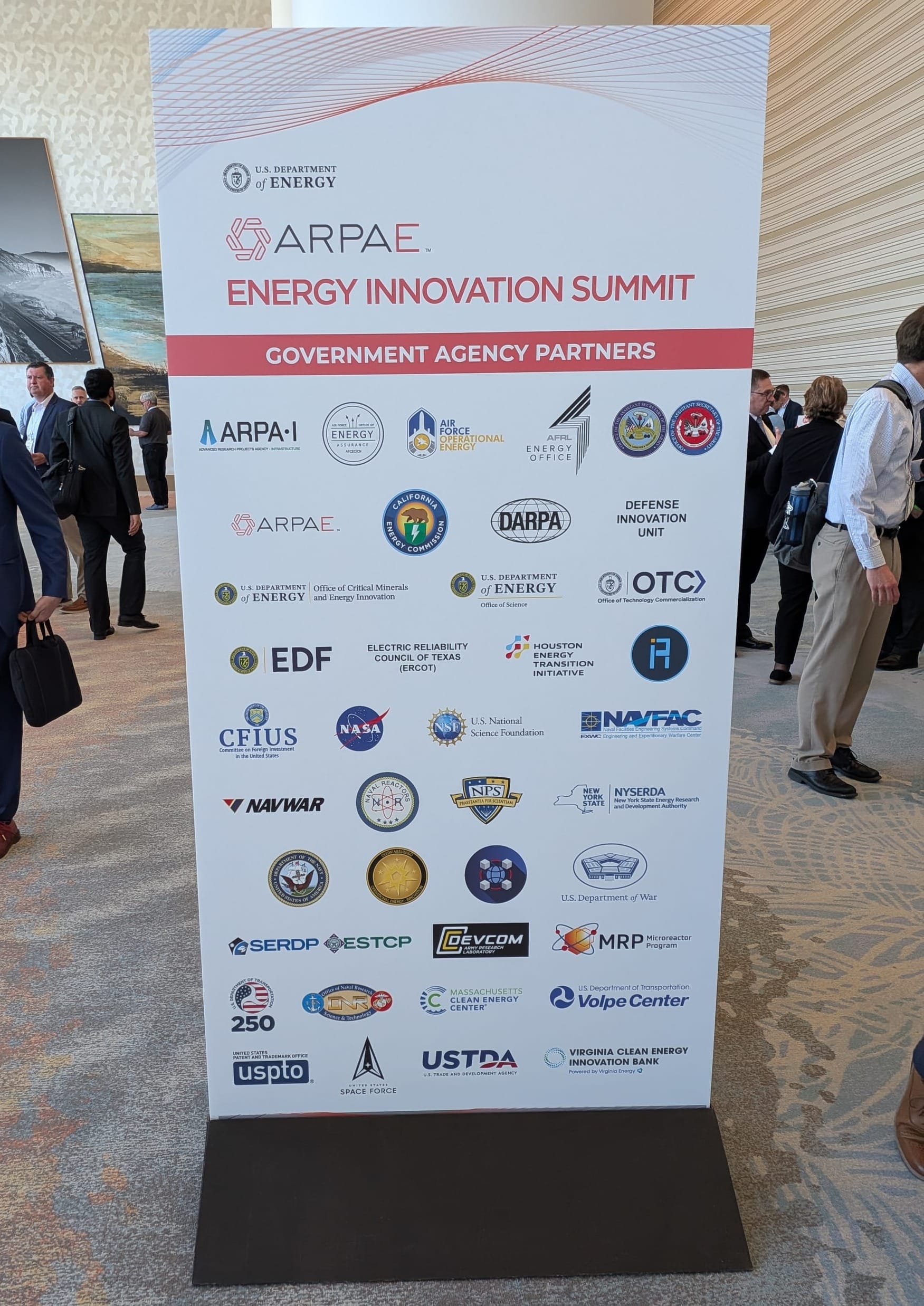
The most valuable thing about ARPA-E for a startup founder is not any single technology. It is the architecture of the event itself.
ARPA-E pulls government agencies, venture capital, national laboratories, and industry leaders into one room, then designs matchmaking sessions that create direct conversations you would otherwise spend months chasing. I watched how other founders and researchers engage across roles, how they position with program directors, how they build relationships within the ecosystem. It felt less like a conference and more like a navigation map for the entire energy innovation landscape.
For someone building a company at the intersection of photonics, defense, and energy, this kind of structural visibility is irreplaceable. You see not just who is funding what, but how the funding logic connects across programs, and where the white spaces are.
The pattern underneath
ARPA-E's innovation landscape is far wider than photonics. Batteries, hydrogen, geothermal, superconductors, bio-mining. The Summit made that breadth viscerally clear. But a quieter pattern runs through several of the most ambitious bets: photons keep showing up as the cross-cutting enabler.
Limelight Steel needs laser diode arrays to replace blast furnaces. Fusion needs laser drivers to compress fuel targets. TPV needs semiconductor junctions to convert thermal radiation into electricity without moving parts. These are unrelated applications solving unrelated problems, yet they all converge on the same physical need: massive, reliable, affordable high-power photon sources.
That convergence is the thesis Holonomy Systems is built on. The application layer of photonics is being built across defense, energy, and industry. But the photon engine capable of driving these applications at civilization scale does not exist yet. The incumbent semiconductor laser architecture, edge-emitting diode bars, relies on serial manufacturing, suffers from catastrophic optical damage as a fundamental failure mode, and cannot share learning curves across applications. A single fusion power plant would require roughly three times the world's current annual production of high-power diode bars.
Holonomy is building the next-generation photon engine: a standardized, surface-emitting semiconductor laser platform designed to serve defense, science, and fusion from the same manufacturing line. We enter through defense because defense pays a premium for reliability and tolerates new architectures. We use that revenue to build manufacturing capability and fleet-scale reliability data. Then we expand along the cost curve toward industrial, scientific, and ultimately fusion scale.
Coming back from ARPA-E, my conviction is sharper. The scientists imagining new uses for photons are the real demand-side accelerators. Our job is to make sure the engine is ready when they need it.